


centres chaires excellence edc paris business school

Centers of excellence and Chairs

PRESENTATION

The implementation of centres of excellence and chairs aims to achieve three main objectives:

  • To increase the visibility of our areas of differentiation and to raise our profile nationally and internationally;

  • Make our multi-disciplinary expertise available to the professional world by creating synergies;

  • To provide answers to the current challenges facing businesses.
 

Imagen
centres chaires excellence edc paris business school 2
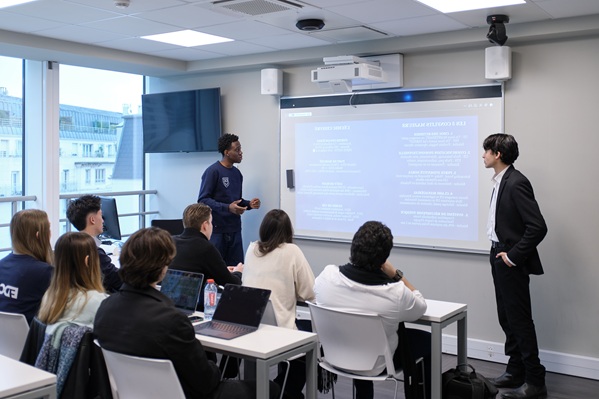
The four centres of excellence help to disseminate and promote the Faculty’s intellectual output. Linked to the centres of excellence, the research and teaching chairs aim to involve one or more companies in a project around a targeted theme in the variou

Centre of excellence: Entrepreneurship & Business Development

Associated Chair: “Impact Lab-Entreprendre votre territoire autrement”.
In partnership with LabEx Entreprendre, University of Montpellier

  • Mission and objectives: To explore and develop innovative approaches to entrepreneurship and innovation in both the private sector (economic entrepreneurship, intrapreneurship, public and political extrapreneurship) and the public sector (innovation and public and political entrepreneurship, territorial attractiveness, public support), with a focus on impact, sobriety and territories.

  • Steering committee: Patrice Schoch, lecturer and researcher in entrepreneurship, EDC Paris Business School and Karim Messeghem, EDC Scientific Advisor, University Professor, University of Montpellier.

Centre of Excellence: Strategy, Innovation and Digital

Associated Chair: Strategic Intelligence, Innovation & Transition
 

  • Mission and objectives: To explore the interconnections between strategic intelligence, innovation and transitions by developing innovative, multidisciplinary approaches.

  • Steering committee: Jihene Cherbib, teacher-researcher in strategy, EDC Paris Business School and Christophe Assens, EDC Scientific Advisor, University Professor, Université Versailles Saint-Quentin-En-Yvelines.


Centre of Excellence: Luxury Management

Associated Chair: “Innovation and the Luxury Industry
In conjunction with our Sup de Luxe institute

  • Mission and objectives: To develop joint initiatives in the fields of teaching and research relating to the luxury industry.

  • Steering committee: Camila Lee Park, teacher-researcher in management, EDC Paris Business School and Mauro Fracarolli, teacher-researcher in management, EDC Paris Business School.

Centre of Excellence: Finance, Ethics and Sustainability

Associated Chair: “Fair ecological and energy transition”.
In partnership with the Alliance des Générations pour le Climat.

  • Mission and objectives: To explore the concept of just transition and the challenges to be met around the following themes: economic implications of just transition, deployment of renewable energies, climate risks (modelling and assessment), intergenerational choices in the face of global environmental change, implications of climate shocks for agriculture, food and water.

  • Steering committee: Zied Ftiti, lecturer and researcher in finance, EDC Paris Business School and Atif Khan, lecturer and researcher in sustainable management, DD/RSE Director, EDC Paris Business School and Jacques Bregeon, Chairman of the Alliance des Générations pour le Climat.

Chairs at EDC Paris

Impact Lab Chair in ‘Entrepreneurship & Business Development’:

Imagen
chaire impact lab edc paris

Why the Impact Lab Chair?

Because transforming regions requires innovative and responsible solutions, Impact Lab aims to bring together businesses, public institutions and experts to tackle economic, social and environmental challenges. Together, let’s make entrepreneurship and innovation drivers of sustainable and positive impact.

Missions of the Impact Lab Chair

  • Impact entrepreneurship: developing responsible business models with measurable social and environmental benefits.

  • Revitalising local ecosystems: strengthening regional resilience by fostering collaborative innovation

  • Applied technological advancements: using digital technology, AI and emerging technologies to optimise the efficiency and impact of projects.
     

An approach based on Impact-Driven Action and Local Areas

  1. Exploring local needs

    Identifying the social, economic and environmental challenges specific to local areas, in collaboration with local stakeholders.

  2. Co-creating solutions

    Organising participatory workshops bringing together entrepreneurs, researchers and decision-makers to design innovative and responsible business models.

  3. Experimentation

    Test pilot projects in the field by involving local partners and regional resources.

  4. Strengthening local ecosystems

    Develop sustainable partnerships between public and private stakeholders to ensure the widespread dissemination and adoption of innovative projects.

  5. Monitoring and impact assessment

    Measure the effectiveness of the actions undertaken in terms of economic, social and environmental benefits.

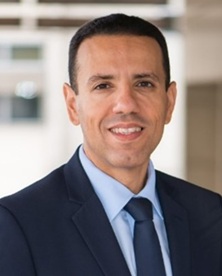
Patrice SCHOCH

Imagen
patrice schoch 2

Head of the Entrepreneurship Department  & Academic Coordinator of the Chairs, EDC Paris Business School

Karim MESSEGHEM

Imagen
karim messeghem

Scientific Advisor, EDC Paris Business School; Professor, University of Montpellier

ISITLab Chair, ‘Strategic Intelligence, Innovation and Transition’

Imagen
chaire isit lab edc paris

Why the ISIT Lab Chair?

Navigating a changing world requires visionary strategies and proactive foresight. ISIT Lab is therefore dedicated to bringing together businesses, institutions and experts to anticipate and address the challenges posed by digital, climate and societal transitions.

Missions of the ISIT Lab Chair

  • Strategic intelligence: providing the tools to anticipate market developments, boost competitiveness and support the development of regions.

  • Organisational innovation: developing approaches to integrate emerging technologies into resilient organisational models.

  • Global transitions: supporting businesses and public organisations in managing social, societal, energy and environmental transformations.

An approach based on Anticip'Action 

  1. Diagnosis

    Analysing organisations’ complex environments to anticipate change.

  2. Modelling

    Developing forward-looking scenarios to help organisations prepare for different eventualities.

  3. Designing innovative strategies

    Co-developing approaches that integrate AI and advanced technologies to optimise organisational performance.

  4. Collective intelligence workshops

    Facilitating collaborative sessions to co-create solutions tailored to global transitions.

  5. Implementation

    Supporting organisations in rolling out and adapting their strategies in response to changes in their environment.

Jihene CHERBIB

Imagen
jihene CHERBIB

Head of Management & Strategy Department
EDC Paris Business School

Christophe ASSENS

Imagen
christophe assens 3

Scientific Advisor EDC Paris Business School, University Professor, University of Versailles St-Quentin en Yvelines

For more information on the chairs:

Patrice Schoch, Scientific Coordinator of the EDC Paris Business School Chairs : [email protected]
Hélène Chareau, Head of Projects and Business Development: [email protected] 

Webinaire

Participez à notre prochain webinaire "Comment trouver son alternance ?" en ligne sur Teams

🗓️Jeudi 23 avril
⌚18h30 à 19h15
📍Sur Teams